Home > News > Industry News
In the fast-paced modern life, people are increasingly emphasizing emotional management and mental health. From meditation apps to healing music, various stress-relieving methods are emerging endlessly. Among these methods, there is an ancient and gentle tool that is quietly making a comeback - scented candles. They not only illuminate the space but also touch the soul with their invisible fragrance. So, how exactly do scented candles affect our emotions? And what scientific principles lie behind this?
1. Olfaction: The "fast track" to emotions
Among the five human senses, the connection between smell and the limbic system (especially the amygdala and hippocampus) is the most direct. This region is responsible for processing emotions, memories, and instinctive reactions. When we inhale fragrance molecules, the odor signals can quickly trigger emotional reactions without undergoing the "rational filtering" of the cerebral cortex.
For example, the aroma of lavender often evokes feelings of tranquility and relaxation; citrus scents generally bring freshness and vitality; while sandalwood or cedar evoke a sense of calmness and security. This phenomenon of "smelling emotions" is not subjective conjecture, but is supported by extensive neuroscientific research.
II. The emotional code of fragrance ingredients
The chemical composition contained in different plant essential oils determines their effects on the nervous system:
Lavender: Rich in linalool, it has a calming effect, can reduce heart rate and cortisol levels, and alleviate anxiety.
Bergamot/Sweet Orange: Contains limonene, which can elevate serotonin levels and alleviate depressive mood.
Eucalyptus/Peppermint: The stimulating ingredients can enhance attention and alertness, making them suitable for use during work or study.
Ylang Ylang/Rose: It has a mild antidepressant effect and is often used to create a romantic or self-caring atmosphere.
These natural ingredients are slowly released through candle combustion, forming a gentle and continuous mechanism for regulating emotions.
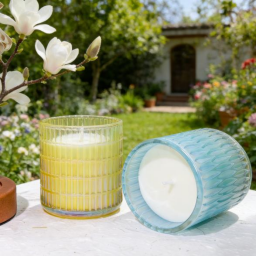
III. The Synergistic Effect of Vision and Ritualistic Feeling
The emotional impact of scented candles does not solely stem from their fragrance. The flickering candlelight itself serves as a healing element. The soft, dynamic light can reduce sympathetic nervous system activity and guide the body into a state of "rest and digestion". Psychological research indicates that gazing at flames can induce a mild meditative state, reduce distracting thoughts, and enhance focus.
In addition, the act of lighting a candle itself carries a strong sense of "ritual". Whether it's lighting a sleep-aid aromatherapy candle before bed or igniting a citrus candle in the morning to kick-start the day, this repetitive ritual can establish psychological anchors, helping people shift states and establish a sense of boundary - which is particularly important in an era where working from home is prevalent.
IV. Scientific verification: Is fragrance really effective?
Multiple clinical studies support the positive impact of aromatherapy on mood. For instance, a study published in Complementary Therapies in Clinical Practice in 2017 found that participants who inhaled lavender fragrance daily for two consecutive weeks experienced a significant decrease in anxiety scores. Another experiment conducted among office workers demonstrated that the use of citrus fragrance could enhance work efficiency and emotional satisfaction.
Of course, the effect varies from person to person, and aromatherapy candles are not a substitute for medication. However, for mild stress, daily mood swings, or sleep disorders, it serves as a safe and low-threshold auxiliary tool.
V. Wisdom in Selection and Use
To maximize the emotional benefits of scented candles, the following points should be noted:
Prefer natural ingredients: Choose products based on soy wax and beeswax, combined with pure plant essential oils, to avoid headaches or allergies that may be caused by synthetic essences.
Matching scenarios and needs: Soothing fragrances (such as lavender and chamomile) are suitable for evening use, while refreshing fragrances (such as lemon and rosemary) are preferable for daytime.
Control usage time: Single combustion should not exceed 4 hours to avoid excessive stimulation of the olfactory system.
Combine with other sensory experiences: pair it with gentle music, a comfortable cushion, or a cup of hot tea to create a multi-dimensional healing environment.
Conclusion
Aromatherapy candles, seemingly simple, are actually the intersection of science, art, and life philosophy. They are not loud, yet they can soothe anxiety silently; they are not aggressive, yet they can reshape our inner rhythm with their subtle light and fragrance. In this era of information overload, perhaps we all need such a small candle - not only to illuminate the room, but also to illuminate our inner selves.
"In darkness, a single light suffices; amidst clamor, a whiff of fragrance brings tranquility."
 Hot News
Aoyin Xingtang Candle Co., Ltd., founded in January 2014, is situated Hebei Province. it features 5 production lines and over 400 machines, specializing in scented candles, tea lights, jar candles, pillar candles, and more.
Fengjiazuo Village West, Yuting Township, Shijiazhuang, Hebei, China
Copyright © Aoyin Xingtang Candle Co., Ltd. All Rights Reserved Privacy Policy
 EN
EN