Home > News > Industry News
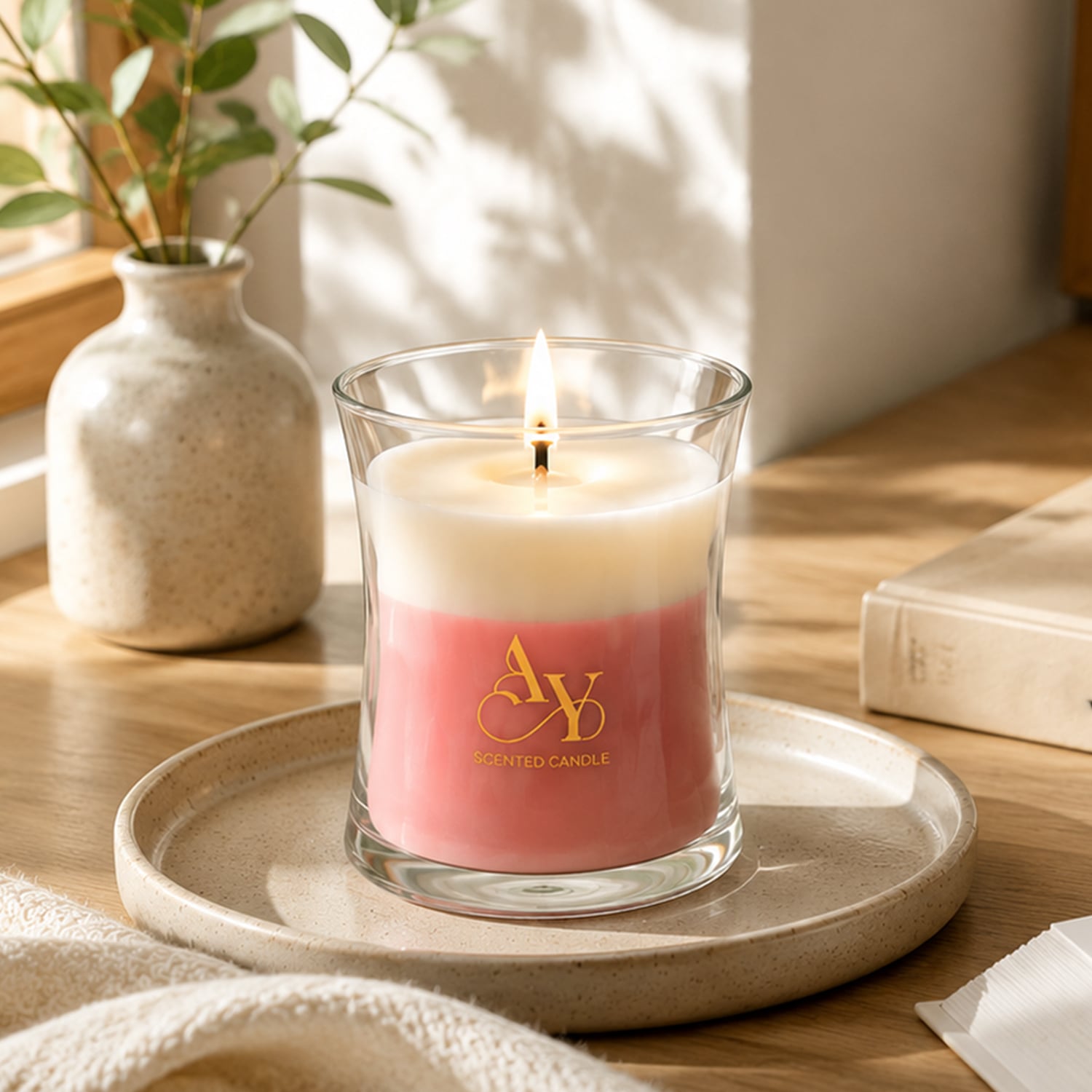
Have you ever lit a scented candle and wondered, “Why can't I smell my scented candle?” You may notice a pleasant fragrance when the candle is unlit, but the scent seems to disappear once you light it. This is a common concern among scented candle users.
Several factors can affect candle fragrance performance, including room size, wax type, fragrance formulation, wick design, and air circulation. Understanding these factors can help you enjoy a better home fragrance experience.
One of the most common reasons a scented candle smells weak is that the room is too large for the candle's fragrance output. A small candle may work well in a bedroom or bathroom but provide less noticeable fragrance in a large living room or open-plan space.
What can you do?
Choose a scented candle appropriate for your room size. For larger spaces, consider a candle specifically designed for stronger fragrance performance, and always follow the manufacturer's burning instructions.
If you can no longer smell your scented candle after it has been burning for a while, you may be experiencing olfactory adaptation. This happens when your sense of smell becomes less responsive to a fragrance after continued exposure.
The candle may still be releasing fragrance even if you no longer notice it as strongly.
What can you do?
Leave the room for a short period and return later. You may notice the scent more clearly after spending time in a different environment.
Not all scented candles deliver the same fragrance intensity. The type and concentration of fragrance oil, wax composition, and overall candle formulation can influence how well a fragrance is released during burning.
A candle that smells strong when cold does not necessarily produce an equally strong scent when lit. This is because cold throw and hot throw are different aspects of candle fragrance performance.
What can you do?
Choose candles from manufacturers that test fragrance performance during burning. A well-formulated scented candle should balance noticeable fragrance, consistent burning, and appropriate safety standards.
Different waxes have different characteristics that may influence fragrance release.
Soy wax: Commonly used in home fragrance products and valued for its plant-based origin. Its scent performance depends on the specific formulation.
Paraffin wax: Widely used in commercial candle manufacturing and can deliver strong fragrance performance when properly formulated.
Blended wax: Combines different wax materials to achieve desired burning characteristics and fragrance performance.
There is no single wax type that guarantees the strongest scent. The fragrance oil, wax blend, wick, and manufacturing process all work together to determine the final result.
The wick helps control how the candle burns and how heat reaches the wax. If the wick is too small, the candle may not develop an adequate melt pool. If it is too large, the candle may burn too hot and produce excessive soot.
Both situations can affect the candle's overall performance.
What can you do?
Trim the wick according to the manufacturer's instructions before lighting the candle. If the candle repeatedly burns unevenly or produces very little fragrance, its wick design or overall formulation may need to be reviewed.
Strong airflow from open windows, fans, or air-conditioning vents can affect how fragrance spreads throughout a room. Drafts may also cause an uneven flame and inconsistent burning.
What can you do?
Place your scented candle on a stable, heat-resistant surface in a well-ventilated area away from strong drafts. Keep it away from flammable objects, and never leave a burning candle unattended.
A scented candle needs to warm up before releasing fragrance effectively. If it is extinguished too quickly, the wax may melt only around the wick, creating a tunnel and reducing the usable candle surface.
Follow the manufacturer's recommended burn time and allow the wax to melt evenly across the surface when appropriate. Never exceed the recommended burning duration or leave a candle burning unattended.
This can happen because cold throw and hot throw depend on different factors. Fragrance ingredients, wax composition, fragrance concentration, and burning conditions all influence how a candle smells before and during use.
Choose a candle suited to your room size, avoid strong drafts, maintain the wick properly, and select products designed for good fragrance performance. If the scent remains weak, the candle's formulation may be the underlying issue.
Not necessarily. Soy wax and paraffin wax can both produce noticeable fragrance when properly formulated. Actual performance depends on the fragrance oil, wax blend, wick design, and manufacturing process.
There is no universal time. Fragrance strength, candle size, room dimensions, ceiling height, and airflow can all affect how quickly the scent becomes noticeable.
Yes. Fragrance may gradually change or weaken depending on storage conditions, packaging, and the fragrance ingredients. Store candles in a cool, dry place away from direct sunlight and excessive heat.
If you frequently ask, “Why can't I smell my scented candle?”, the issue may not be your sense of smell alone. Room size, fragrance formulation, wax type, wick selection, and burning conditions can all influence the experience.
For retailers, wholesalers, and private-label buyers, consistent fragrance performance is an important consideration when sourcing scented jar candles and aromatherapy candles. Working with an experienced candle manufacturer can help buyers evaluate fragrance options, product consistency, packaging, and customized solutions for different markets.
At Aoyin Xingtang Candle Industry Co., Ltd., we supply a range of candle products for international wholesale and private-label projects. Contact our team to discuss your scented candle product requirements and customization options.
 Hot News

Aoyin Xingtang Candle Co., Ltd., founded in January 2014, is situated Hebei Province. it features 5 production lines and over 400 machines, specializing in scented candles, tea lights, jar candles, pillar candles, and more.
Fengjiazuo Village West, Yuting Township, Shijiazhuang, Hebei, China
Copyright © Aoyin Xingtang Candle Co., Ltd. All Rights Reserved Privacy Policy
 EN