Home > News > Industry News
Hospitality spaces have used flame, shadow, and warm light for centuries to shape the feeling of welcome. Before electric lighting became dominant, dining rooms, inns, banquet halls, and ceremonial interiors relied on wax light not only for visibility but also for rhythm, intimacy, and social atmosphere. In modern hotels and restaurants, lighting design has become more layered, combining architecture, furniture, table setting, fragrance control, and guest movement. Buyers now consider how small objects influence a guest’s perception of cleanliness, calm, and occasion. Within this wider hospitality context, Unscented Pillar Candles, unscented candles, restaurant candles, and hotel candles belong to a practical category where visual atmosphere and neutral sensory control meet.
Unscented Pillar Candles are best understood as independent wax forms designed to create visual warmth without adding fragrance to the space. For hotels and restaurants, this distinction matters because scent is already present through food, flowers, linens, cleaning products, guests’ perfumes, and interior materials. A neutral flame allows the setting to feel warm without competing with these existing sensory elements.
In hospitality design, decorative candles often work as quiet visual anchors. They can soften a reception area, add depth to a dinner table, or create a ceremonial feeling in a private event room. Home décor candles may focus on domestic styling, but in commercial settings the same object must also support repetition, safety awareness, staff handling, and brand consistency. A well-planned use of Unscented Pillar Candles helps the product feel integrated with the interior rather than added as a loose accessory.
For hotel candles, the meaning often changes by location. A lobby may require a calm and refined impression, while a guest lounge may need a softer evening mood. Restaurant candles are read more closely because they sit near food, glassware, cutlery, and guests’ hands. The visual effect should be present, but not distracting.
Unscented candles are especially relevant in dining environments because fragrance can interfere with taste perception. Guests enter a restaurant expecting aroma from cuisine, wine, coffee, flowers, and service rituals. If a candle introduces a strong scent, it may disturb the intended food experience. This is why restaurant candles are usually selected for flame shape, color tone, wax stability, and table compatibility rather than perfume.
The idea of neutrality does not mean lack of character. It means the candle supports the dining scene without taking control of it. Wedding candles and church candles also share this logic in different ways. In weddings, the flame supports emotion, photography, and ceremony while leaving room for flowers and catering. In religious or formal spaces, the product may carry symbolic weight, where scent neutrality allows the ritual atmosphere to remain focused. For hospitality buyers, this makes the unscented pillar format useful across several event-driven settings.
Hotel candles are not only used on tables. They may appear in spa waiting areas, outdoor terraces, banquet entrances, suite decorations, seasonal displays, and brand photography. Their role is to help a space feel considered. Decorative candles, when chosen carefully, can connect lighting with materials such as stone, wood, glass, metal, and fabric. The wax color and surface finish become part of the interior language.
Home décor candles provide useful inspiration for hospitality buyers because many guests now expect hotels and restaurants to feel lifestyle-oriented. However, commercial application requires a more controlled interpretation. A candle used in a private home may be selected for personal taste, while a candle used in a hotel must fit repeated placement and broader guest expectations. The product should look consistent in different rooms and under different lighting conditions, from daylight breakfast areas to evening service.
The key concept is spatial identity. A white or ivory wax form may express calm and cleanliness, while deeper tones can suggest drama, seasonality, or intimacy. The choice should follow the property’s visual world rather than short-term preference.
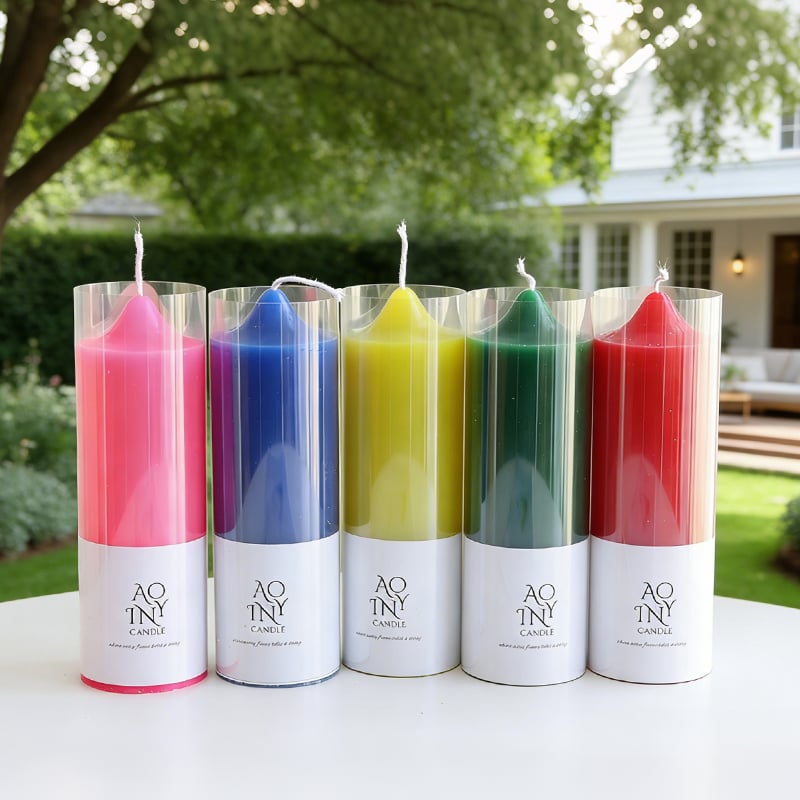
Pillar candles have a strong physical presence because the wax body is visible from every side. Their height, diameter, edge shape, and surface finish all affect how they read in a hospitality setting. A small piece may work on a compact dining table, while a taller form may suit an entrance display or banquet arrangement. The same product can feel elegant or oversized depending on the table scale and surrounding objects.
For hotel and restaurant buyers, size should be linked with burn behavior. A larger wax form may suggest longer use, but it still needs the correct wick and stable wax structure. If the flame is too large, the guest experience may feel unsafe or visually harsh. If the flame is too small, the candle may tunnel and leave unused wax. Good selection depends on how the item will be placed, how long it will be lit during service, and how staff will monitor it.
Burning behavior is also affected by airflow. Doors, air conditioning, outdoor terraces, and guest movement can all change the flame. A product that burns well in a still test room may behave differently in a busy restaurant. Buyers should therefore treat usage context as part of the product concept.
Paraffin wax candles are often used where shape stability, clean molding, and consistent color are important. Their visual clarity can support classic hospitality styling, especially in white, ivory, and seasonal tones. Soy wax pillar candles may appeal to buyers who want a plant-based material story, although soy-based structures may require careful formulation to maintain hardness and surface quality.
Material choice should not be reduced to a simple label. The wax blend, wick type, cooling process, pigment, and storage conditions all influence the final product. For Unscented Pillar Candles, fragrance compatibility is not the issue, but structural integrity and controlled burning remain central. A candle that looks smooth at delivery but softens, chips, bends, or burns unevenly during service can weaken the hospitality image.
Color also belongs to material meaning. Hotels and restaurants often rely on white, ivory, cream, black, burgundy, gold, or seasonal shades. Slight differences in tone can become visible when many pieces are placed together. This is why physical samples and approved references are important before large orders.
Bulk candles are common in hospitality because venues often need repeated use across rooms, tables, events, and seasonal programs. Wholesale candles may appear simple at first glance, but the purchasing process should account for carton protection, heat exposure, surface scratches, labeling, and storage practices. Since this product has no container to hide surface marks, the outer appearance is part of the delivered value.
Supplier coordination becomes important when buyers need consistent replenishment. A candle manufacturer should be able to discuss wax hardness, wick matching, color confirmation, packing structure, and burn review in practical terms. A candle supplier should also understand hospitality use, where products may be handled by service teams rather than final consumers. Aoyin Xingtang Candle can be naturally considered in this context as a production partner supporting customized wax products, packaging, logo application, and export-ready coordination for international hospitality projects.
The supplier relationship should connect samples with real service conditions. Buyers may review how the product looks on a table, how it burns through a dinner period, how it is extinguished, and how it appears after storage. This creates a more realistic basis for repeat purchasing.
Private label candles allow hotel groups, restaurant brands, and event venues to make flame products part of their own visual identity. A logo on the box or label may be enough for some projects, while others require a specific color, finish, size, or packaging style. OEM candles can support deeper customization when the buyer wants a product shaped around brand standards and operational needs.
A strong buying brief should describe the venue type, use location, expected burn duration, color direction, packaging requirement, storage environment, and safety labeling expectation. It should also clarify whether the product will be used daily, seasonally, or only for special events. When these details are defined, communication with the supplier becomes more precise and sample evaluation becomes easier.
For hotels and restaurants, the goal is not simply to buy wax products, but to select items that fit service rhythm, interior mood, and guest perception. The next sourcing conversation can begin with a clear brief for Unscented Pillar Candles.
 Hot News
Aoyin Xingtang Candle Co., Ltd., founded in January 2014, is situated Hebei Province. it features 5 production lines and over 400 machines, specializing in scented candles, tea lights, jar candles, pillar candles, and more.
Fengjiazuo Village West, Yuting Township, Shijiazhuang, Hebei, China
Copyright © Aoyin Xingtang Candle Co., Ltd. All Rights Reserved Privacy Policy
 EN
EN