Home interiors have gradually moved from purely functional arrangement to emotional and material expression. Objects on shelves, tables, and bedside surfaces now communicate taste through texture, weight, color, and quiet visual presence. In this shift, candles have become part of interior styling as much as fragrance use, especially for brands that connect home atmosphere with tactile design. Around this context, the Cement Jar Candle has gained attention because concrete candles combine scent, vessel, and décor language in one product category. For home fragrance candles and scented candles, the container is no longer only a holder; it becomes part of the brand story.
Cement Jar Candle in Material-Led Home Fragrance
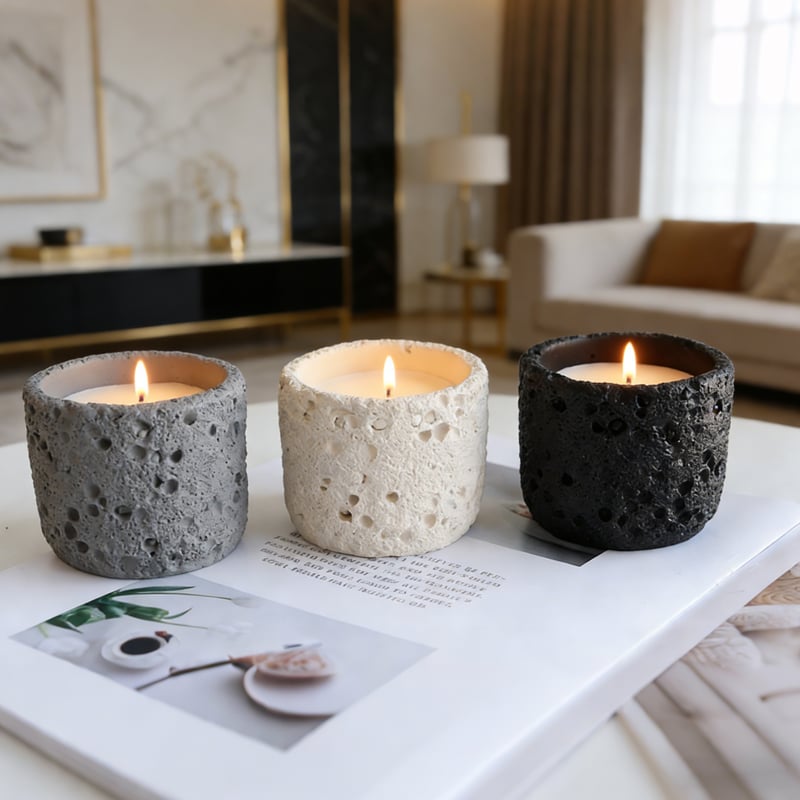
A Cement Jar Candle should be understood first as a material-led home object, not merely as a filled wax product. Its appeal comes from the way cement changes the emotional reading of a candle. Glass often feels clean and transparent, metal can feel light and practical, while cement suggests weight, stillness, texture, and architectural calm.
A Cement Jar Candle fits brands that want to express natural minimalism, slow living, neutral interiors, or contemporary craft. The concrete candle jar gives the product a stronger physical identity on a table or shelf. It belongs naturally beside ceramics, stone trays, wooden furniture, linen textiles, and muted wall colors. Compared with many home décor candles, concrete candles often feel less ornamental and more structural, which makes them useful for brands that want their fragrance products to remain visible even when they are not burning.
The concept is important because home brands are not only selling scent. They are selling a visual and tactile relationship with the home. When buyers pick up a cement vessel, they feel weight before they smell fragrance. That first impression influences how they understand price, quality, and design intention.
Concrete Candle Jar and Cement Candle Jar Identity
The central decision is whether the vessel should feel raw, refined, rustic, or premium. A concrete candle jar can appear industrial and handmade, while a cement candle jar can also be polished, colored, sealed, and shaped into a softer interior object. The same material can therefore support very different brand identities.
A Cement Jar Candle with a rough grey surface may suit a minimalist or architectural collection. A cement candle jar in beige, ivory, charcoal, or terracotta may fit warmer lifestyle branding. A concrete candle jar with a terrazzo effect can bring a more decorative tone without losing the mineral feeling of the material. For custom candles, the vessel surface should be decided together with the label, lid, box, and fragrance name, because each element changes the final reading.
Home brands should also consider how much variation they are willing to accept. Cement naturally carries subtle surface differences, small air marks, and tone variation. These details may create a handmade impression, but they must be controlled enough for retail consistency. The balance between natural character and repeatable production is one of the defining questions of this category.
Scented Candles and Soy Wax Candles in a Cement Vessel
The key concept is that wax, wick, fragrance, and vessel are one system. Scented Candles and Soy Wax Candles behave differently depending on container width, wall thickness, heat retention, and surface treatment. A cement vessel is not only a visual choice; it also affects how the candle performs during use.
A Cement Jar Candle often uses a thick container, so the wick must be matched carefully to the wax and fragrance formula. For scented candles, a strong cold fragrance may create interest at first, but the real customer experience depends on hot throw, flame stability, wax pool development, and clean burning. Soy wax candles are popular among home brands because they support a natural and soft lifestyle image, yet they still require testing to avoid tunneling, weak scent release, or uneven melting.
Home fragrance candles are judged over time. The first photo may attract attention, but the burn experience shapes reviews and repeat purchase. A responsible candle manufacturer will test the relation between jar diameter, wax blend, wick size, fragrance load, and burn rhythm before recommending a final version. This process turns an attractive object into a product that can function consistently in real homes.
Candle Packaging and Wholesale Candles for Home Brands
The main idea is that Candle Packaging and Wholesale Candles must protect both the object and the brand impression. Cement vessels feel solid, but they can chip, scratch, or rub against packaging if the inner structure is not planned well. A heavy jar also changes shipping cost, carton strength, and the way retailers handle inventory.
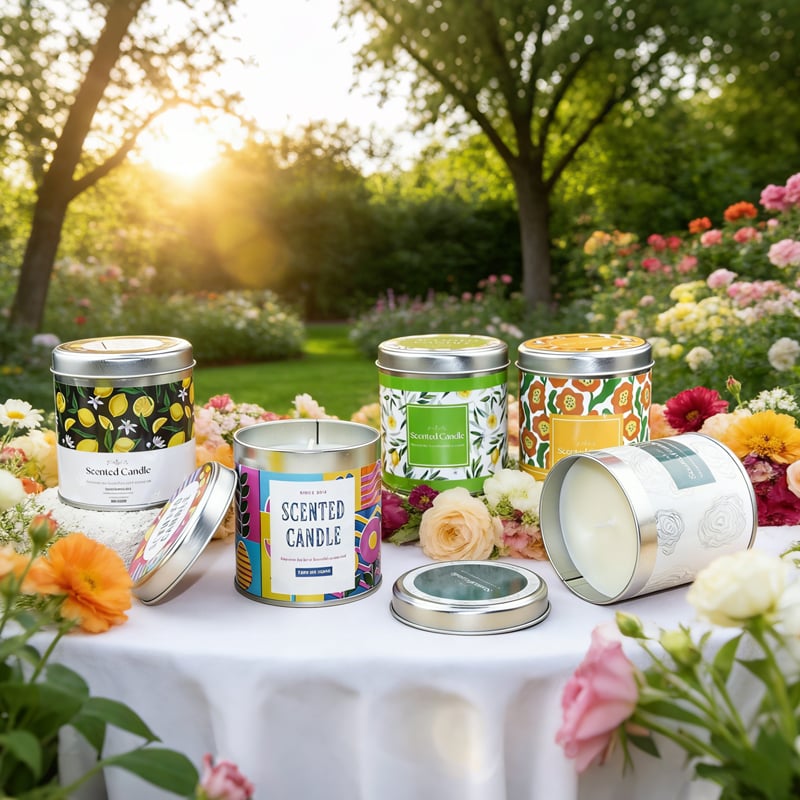
Candle packaging for this category should respect the material. A simple kraft box can support a natural handmade image, while a rigid paper box may create a more premium feeling. If the vessel surface is visually important, the outer presentation should not overcomplicate the product. For wholesale candles, the package must work across warehouse storage, international transport, retail display, and final customer delivery.
Private label candles add another layer of decision-making. The brand may choose a front label, bottom label, sleeve, printed box, or minimal unbranded vessel. Cement surfaces are not always ideal for every adhesive, so label testing is part of the product concept. Packaging should also include the necessary use information and warning details according to the target market, because a candle is both a lifestyle product and a burning product.
Private Label Candles, OEM Candles, and Supplier Alignment
The practical meaning of Private Label Candles and OEM Candles is brand control. Private label development allows a home brand to apply its own visual identity to an existing or semi-custom product structure. Deeper OEM development allows changes in vessel shape, color, wax type, fragrance profile, lid style, and box design.
OEM candles require clear communication because cement, wax, fragrance, and packaging involve different production details. A candle supplier should be able to discuss sample approval, color tolerance, surface finish, packing method, and batch consistency. Aoyin Xingtang Candle can be considered in this context as a production partner for customized candle projects, packaging coordination, logo application, and export-ready supply, especially when buyers need a bridge between creative direction and stable manufacturing.
The supplier relationship should not begin only with price. It should begin with the intended customer, retail channel, interior style, and product role. When these points are clear, sampling becomes more focused and the final product is easier to control.
Cement Jar Candle as a Long-Term Collection Concept
A Cement Jar Candle can become more than a single launch when it is planned as part of a continuing home collection. The vessel may remain consistent while fragrance, color, lid, or outer box changes by season. This gives the brand a recognizable object while allowing variation within the range.
For home brands, the next step is to define where the product sits among home fragrance candles and wider interior accessories. If the goal is to build a calm, tactile, and design-oriented fragrance line, start by preparing a clear brief for the Cement Jar Candle, including vessel mood, scent direction, packaging tone, and sales channel. Then request samples, review them in real home settings, and move toward production with a supplier that understands both material and fragrance.

 Hot News
 EN
EN